


Caraco v. Novo Nordisk: Supreme Court Alters the Landscape of Hatch-Waxman Litigation
 On Monday, May 7th, PLI will be hosting a One Hour Briefing entitled, “Caraco v. Novo Nordisk: Supreme Court Alters the Landscape of Hatch-Waxman Litigation by Adopting Expansive Interpretation of Counterclaims Provision.“ This briefing will be conducted by Elaine Herrmann Blais and Robert D. Carroll, partners in the law firm Goodwin Procter LLP. The U.S. Supreme Court’s decision in Caraco Pharmaceutical Laboratories Ltd. v. Novo Nordisk A/S, clarified the circumstances in which generic drug companies can challenge the scope of the “use codes” for the patents that branded drug companies list in the FDA’s “Orange Book.” (more…)
Facebook Continues to Load Its Patent Arsenal
 The patent wars are all the rage amongst tech companies these days. Not too long ago, Microsoft Corp. made news when announcing it purchased approximately 925 patents from AOL, Inc. for an estimated $1.1 billion dollars. The commentary regarding that purchase was equally focused on the impressive sale price for the amount of patents purchased as it was on the fact that tech companies are looking twice at their patent portfolios as litigation and licensing tools.
The latest development is that Facebook, who is currently in a patent infringement battle with Yahoo, recently purchased 650 of the AOL patents from Microsoft for an estimated $550 million dollars. This recent acquisition comes just one month after Facebook purchased 750 patents from IBM. (more…)
Twitter’s Innovator’s Patent Agreement: The Future or Foolish?
 Tech companies’ battles over patent portfolios have become the new norm in patent litigation. Yahoo sued Facebook over the alleged infringement of 10 patents, Oracle and Google are battling over operating system patents, Apple and Samsung have patent litigation in 10 countries simultaneously, and Microsoft just purchased 800 patents from AOL for over $1.1 billion dollars. We have previously reported on the growing use of patents as more than just defensive tools. But last week, Twitter announced it would not participate in such litigation.
Twitter’s Innovator’s Patent Agreement proposes that if a patent is assigned to Twitter, Twitter promises it won’t use that patent to sue anyone, except for defensive purposes or unless the engineers grant permission to the company to do so. According to Twitter’s announcement,
The IPA is a new way to do patent assignment that keeps control in the hands of engineers and designers. It is a commitment from Twitter to our employees that patents can only be used for defensive purposes. We will not use the patents from employees’ inventions in offensive litigation without their permission. What’s more, this control flows with the patents, so if we sold them to others, they could only use them as the inventor intended.
This is a significant departure from the current state of affairs in the industry. Typically, engineers and designers sign an agreement with their company that irrevocably gives that company any patents filed related to the employee’s work. The company then has control over the patents and can use them however they want, which may include selling them to others who can also use them however they want. With the IPA, employees can be assured that their patents will be used only as a shield rather than as a weapon.
Twitter’s proposed patent litigation model has received support as well as criticism. Supporters applaud Twitter for actively promoting creativity and innovation via its promise to not actively pursue legal recourse. Such a business model also reduces the amount of money spent by the company for litigation. Critics, including frequent PLI speaker Mark Radcliffe, on the other hand, question whether Twitter made a wise decision considering they could end up needing to pursue patent infringement litigation in the future. By granting technology engineers with the right to veto a legal action, Twitter would essentially be granting the power to make legal decisions to non-lawyers. Meanwhile Twitter’s plan gets implemented, the patent wars will rage on in courts all over the world. Time will tell what impact Twitter’s stance will have on patent litigation.
Top 5 Patent Law Blog Posts of the Week
 Today we continue our weekly installment highlighting the best of the patent blogosphere from the past week. If there are any patent blogs you think should be highlighted by our Top 5, please comment on this post and we’ll check them out.
1) Patently-O: AIA Changes The Role of the Eastern District of Texas – This post brings attention to the article, 2011 Trends in Patent Case Filings, by James C. Pistorino and Susan Crane, in which they discuss the impact the AIA’s new joinder provisions has on the distribution of new lawsuit filings. The new joinder rules limit the ability of a plaintiff to join multiple unrelated defendants in a single action, which as a result, may allow courts to more easily transfer venue and thus shift filing focus away from the Eastern District of Texas.
2) Article One Partners Blog: Donald Duck, Patents, and Ping Pong Balls – This post entertains the notion that it may be possible to use a comic strip as a form of prior art. As per the post, ” “Enabling” is a key facet of prior art. On the other hand, if one can demonstrate obviousness, then a patent can be rendered moot. In this case, Donald Duck may have succeeded in making the idea obvious.”
03.23.12 | patent infringement, Patent Issues, Patent Policy, posts, USPTO | Mark Dighton
Yahoo Threatens Facebook with Patent Infringement Claims
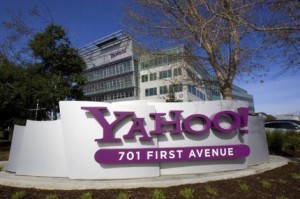 In one of the first patent fights within the social media arena, Yahoo claims that 10-20 of its technology patents are currently being infringed by Facebook. The New York Times DealBook reports that Yahoo has alerted Facebook that it will be forced to engage in a patent infringement lawsuit unless Facebook agrees to enter a patent licensing agreement. The patents in question cover technologies relating to advertising, the personalization of Web sites, social networking and messaging.
The company may have lost its luster in comparison to its online peers like Google, Facebook, and Twitter, but Yahoo’s intellectual property may in fact be peerless. It appears that of the patents in question, some of them include one of the first patents ever awarded to Yahoo, and their patent portfolio isn’t one to just shrug off. According to IEEE Spectrum, a technology publication, it ranked Yahoo’s patent portfolio in 2011 as being the most valuable among those for communications and Internet services. (more…)
02.29.12 | patent infringement, Patent Licensing, Patent Litigation, posts | Mark Dighton
No Comments
05.2.12 | patent infringement, posts, Supreme Court Cases | Mark Dighton