


Federal Circuit finds no problem with district court re-submitting case to jury
 On January 19, 2018, the Federal Circuit issued a decision in Flexuspine, Inc. v. Globus Med. The appeal centered on the jury verdict form and how the jury specifically handled its duties in relation to that jury form.
The jury form included what is known as a “stop instruction,” which told the jury not to consider any of the invalidity defenses unless they first determined that the defendant was liable for infringement. Globus, the defendant, did not object to the instruction prior to jury deliberations.
Upon reviewing the verdict form after deliberations ended, the district court determined that the jury had not followed the instructions and had filled out the verdict form incorrectly. The jury found no infringement, but did not stop there, and instead moved on to consider invalidity and damages. The jury form indicated that the jury found the claims invalid, and no damages should be awarded.
En banc Federal Circuit overrules Achates on IPR appealability
 Several weeks ago, the Federal Circuit issued an en banc decision in Wi-Fi One, LLC v. Broadcom Corp.
This dispute arose because Congress provided that the Director’s determination “whether to institute an inter partes review under this section shall be final and nonappealable.” Id. § 314(d). Notwithstanding, Congress similarly prohibited the Director from instituting inter partes review if the petition requesting that review is filed more than one year after the petitioner, real party in interest, or privy of the petitioner is served with a complaint for patent infringement. 35 U.S.C. § 315(b).
A panel of the Federal Circuit previously held that a § 315(b) time-bar determination is final and nonappealable under § 314(d). See Achates Reference Publishing, Inc. v. Apple Inc. Therefore, in this en banc appeal, the Federal Circuit had to determine whether the bar on judicial review of institution decisions in § 314(d) applies to time-bar determinations made under § 315(b).
The Federal Circuit reversed Achates, and ruled that time-bar determinations under § 315(b) are appealable.
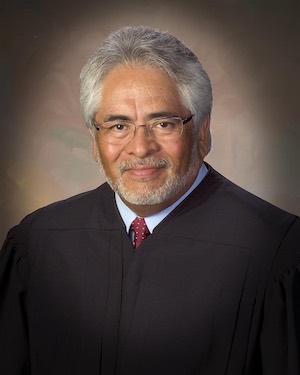
“We find no clear and convincing indication in the specific statutory language in the AIA, the specific legislative history of the AIA, or the statutory scheme as a whole that demonstrates Congress’s intent to bar judicial review of § 315(b) time-bar determinations,” wrote Reyna (pictured left) in the majority opinion. The lack of such a clear and convincing indication from Congress coupled with the strong presumption in favor of judicial review of agency actions lead the majority to hold that time-bar determinations under § 315(b) are appealable. Therefore, this decision overrules Achates’ contrary conclusion.
Substantively, the majority explained that, after reviewing the entire statutory scheme as a whole, § 315 is not substantively related to the institution decision addressed in § 314(a), and it therefore is not subject to § 314(d)’s bar on judicial review.
A concurring opinion was filed by Judge O’Malley. In her concurring opinion, Judge O’Malley wrote that she agreed with the ruling of the majority, but thought the majority made the question more difficult than it needed to be. O’Malley wrote:
If the United States Patent and Trademark Office (“PTO”) exceeds its statutory authority by instituting an IPR proceeding under circumstances contrary to the language of § 315(b), our court, sitting in its proper role as an appellate court, should review those determinations. Indeed, we should address those decisions in order to give effect to the congressionally imposed statutory limitations on the PTO’s authority to institute IPRs.
O’Malley further explained:
Section 314(d)’s bar on appellate review is directed to the Director’s assessment of the substantive adequacy of a timely filed petition. Because § 315(b)’s time bar has nothing to do with the substantive adequacy of the petition and is directed, instead, to the Director’s authority to act, § 314(d) does not apply to decisions under that provision.
02.5.18 | Federal Circuit Cases, Inter Partes Review, Patent Issues | Gene Quinn
Predictions and Musings on 2018
 Each year, I ask a panel of industry experts to make predictions for the upcoming year, and to identify particular news, stories or events they will be watching with interest. See Predictions for 2018 and Topics to Watch in 2018.
Given that several industry insiders were willing to make their own predictions, it seems only fair for me to likewise go out on a limb and make my own predictions.
First, I predict that the United States Supreme Court will find post grant procedures under the America Invents Act to be unconstitutional. It is my belief they took Oil States not as a patent case, but rather as an Administrative State case, and if that is correct, this could be the first in a series of decisions over a number of years that will pull authority back from the growing Administrative State and toward the Judiciary.
01.16.18 | Patent Issues | Gene Quinn
PTAB denies claims of 11th Amendment sovereign immunity
 Several weeks ago, the Patent Trial and Appeal Board (PTAB) of the United States Patent and Trademark Office (USPTO) denied a motion filed by the University of Minnesota in a series of inter partes review (IPR) cases. See Order Denying Patent Owner’s Motion to Dismiss. This extraordinary denial of the motion is newsworthy because Minnesota sought a dismissal of the IPRs based on Eleventh Amendment sovereign immunity. The PTAB previously dismissed similar IPRs against state-owned patents. Here, however, the PTAB in a majority opinion authored by Chief Judge David Ruschke (pictured left), disagreed and refused to dismiss the IPRs.
The PTAB ruled that the University of Minnesota “waived its Eleventh Amendment immunity by filing an action in federal court alleging infringement of the patent being challenged in this proceeding.”
01.11.18 | Inter Partes Review, Patent Issues, USPTO | Gene Quinn
Rovi wins at ITC over Comcast
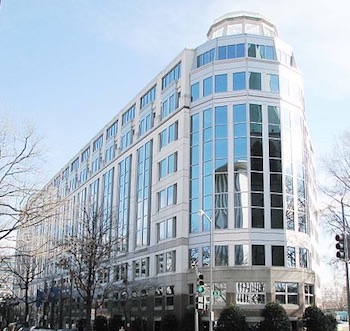 The U.S. International Trade Commission has issued a final determination finding a violation of section 337 in a matter dealing with infringement of patents owned by Rovi Corporation. As a result of the investigation, the ITC issued a limited exclusion order prohibiting importation of certain digital video receivers and hardware and software components, and also issued cease and desist orders directed to the Comcast respondents. This final determination concludes the matter at the ITC and the investigation is now terminated, with this final determination submitted to President Trump for his review.
The Commission instituted this investigation on May 26, 2016, based on a complaint filed by Rovi Corporation and Rovi Guides, Inc. (collectively, “Rovi”), both of San Carlos, California. The complaint alleged violations of section 337 of the Tariff Act of 1930, codified at 19 U.S.C. 1337 (“section 337”). Rovi asserted infringement of U.S. Patent Nos. 8,006,263; 8,578,413; 8,046,801; 8,621,512; 8,768,147; 8,566,871; and 6,418,556.
Prior to the evidentiary hearing, Rovi withdrew certain allegations, but proceeded at the evidentiary hearing on the following patents and claims: claims 7, 18, and 40 of the ’556 patent; claims 1, 2, 14, and 17 of the ’263 patent; claims 1, 5, 10, and 15 of the ’801 patent; claims 12, 17, and 18 of the ’871 patent; claims 1, 3, 5, 9, 10, 14, and 18 of the ’413 patent; and claims 1, 10, 13, and 22 of the ’512 patent.
On May 26, 2017, the administrative law judge (the “ALJ”) issued the final initial determination, which found a violation of section 337 by Respondents in connection with the asserted claims of both the ’263 and ’413 patents. After examining the record in this investigation, the Commission affirmed the final initial determination conclusion that Comcast violated section 337 in connection with the asserted claims of the ’263 and ’413 patents. The Commission also affirmed the conclusion that Comcast’s customers directly infringe the ’263 and ’413 patents. (more…)
12.21.17 | ITC, Patent Issues | Gene Quinn
No Comments
02.6.18 | Federal Circuit Cases, Patent Issues, Patent Litigation | Gene Quinn