


Federal Circuit Makes Mess of Software Patents
 In what can only fairly be characterized as a patent tragedy, the United States Court of Appeals for the Federal Circuit now has no official position on the patentability of system claims that objectively recite volumes of tangible structures that clearly satisfy the machine-or-transformation test. Less than 5 years after giving the industry the rigid machine-or-transformation test, which was ultimately struck down by the Supreme Court, five of the ten judges that heard CLS Bank v. Alice Corporation en banc would find that claims that seem to clearly satisfy the machine-or-transformation test are not patent eligible.
The per curiam decision of the Federal Circuit was very brief. It simply stated:
Upon consideration en banc, a majority of the court affirms the district court’s holding that the asserted method and computer-readable media claims are not directed to eligible subject matter under 35 U.S.C. § 101. An equally divided court affirms the district court’s holding that the asserted system claims are not directed to eligible subject matter under that statute.
A Conversation about Software Patents
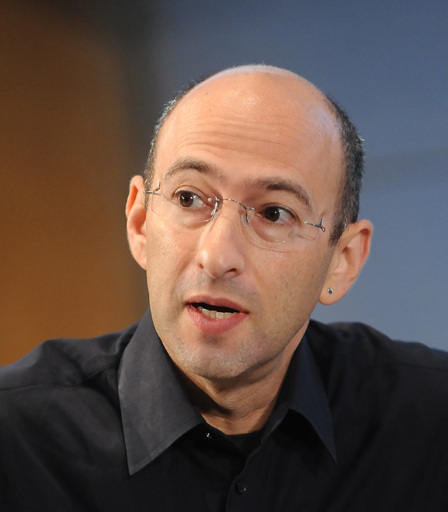 On March 25, 2013, I spoke on the record with Eric Gould Bear (left) about software innovations, software patents and the trials and tribulations of litigating software patents long after they were first written.
Bear is an inventor on over 100 patents and patent applications in the software space. He has spent over 25 years working with numerous Fortune 500 corporations with respect to assisting them in the creation of new user experiences. He is also a founder of the design studio MONKEYmedia, which recently launched a patent infringement lawsuit against Apple, and which also has a patent infringement lawsuit pending against Sony, Disney and others. Bear is also a testifying software expert witness.
During our one-hour discussion, which published in three parts on IPWatchdog.com, we discussed a number of interesting topics. What appears below are some of the highlights of our discussion.
05.8.13 | Patent Issues, Patent Litigation, posts, software patents | Gene Quinn
Algorithm Disclosure: Best Practices in Software Patents
 Essentially, means-plus-function claiming allows the drafter to claim the invention based on functionality rather than the more traditional (and preferred) claim technique that describes structure(s) within the body of the claim itself.
A claim term is functional when it recites a feature by what it does rather than by what it is. There is nothing intrinsically wrong with the use of such claim language, although it is becoming more and more apparent (if it wasn’t already apparent enough) that the Federal Circuit frowns upon means-plus-function claiming.
04.23.13 | Patent Issues, software patents | Gene Quinn
RCT v. Microsoft – Fed. Cir. Attempts to Shift Focus Away from MOT Test
 The following post comes from Clement S. Roberts (Partner at Durie Tangri and Practice Center Contributor).
On December 8 the Federal Circuit issued its first post-Bilski opinion on patentable subject matter when it decided Research Corporation Technologies Inc. v. Microsoft .
In RCT the court was asked whether RCT’s patents on digital image halftoning were directed to patentable subject matter. Digital image halftoning is a technique for displaying tones (either shades of grey or colors) that lie between those that a monitor or printer can natively produce by creating a matrix of dots that blur together when viewed from a distance. The patent was directed to a method for creating a halftoned image using a mask (essentially a series of prearranged dots of known values which can be compared to the pixels in a given image) and, in particular, for creating an improved mask through the use of a particular kind of mathematical operation. For example, claim 1 of one of the two relevant patents called for:
A method for the halftoning of gray scale images by utilizing a pixel-by-pixel comparison of the image against a blue noise mask in which the blue notice mask is comprised of a random non-deterministic, non-white noise single valued function which is designed to produce visually pleasing dot profiles when thresholded at any level of said gray scale images. (more…)
12.29.10 | Bilski, software patents, Supreme Court Cases, USPTO | Stefanie Levine
Top 10 Issues for Patent Litigators in 2011
 Written by Brandon Baum (Partner at Mayer Brown and Practice Center Contributor).
The end of the year is the time for top 10 lists. Here, in no particular order, are my top 10 issues for patent litigators in 2011.
10. Microsoft Corp v. i4i Ltd. Partnership., and the clear and convincing evidence standard where the defendant relies on uncited art. Will the Supreme Court decide that a lesser burden of proof is required to show invalidity when art was never considered by the USPTO? If so, this will profoundly change both litigation and prosecution practice. My favorite possible implication – what presumption applies to a mongrel 103(a) combination of cited and uncited art? And will the PTO experience a data dump of prior art, if Microsoft prevails?
9. Global-Tech Appliances v. SEB S.A., and the standard for proving the mental state required for induced infringement. Whatever language the Supreme Court uses to describe the mental state required to show inducement will send everyone scrambling to prove or disprove the existence of that mental state. (more…)
No Comments
05.13.13 | CAFC, Federal Circuit Cases, patent eligibility, posts, software patents | Gene Quinn