


Trump’s proposed budget would give PTO $3.6 billion for FY 2018
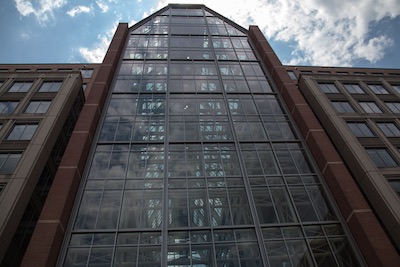 Several weeks ago, President Donald J. Trump released his proposed FY 2018 budget under the title A New Foundation for American Greatness. A review of the budget and supporting Commerce Department Appendix suggests the United States Patent and Trademark Office (USPTO) has received everything it requested, and will not suffer fee diversion during the next fiscal year if the President’s FY 2018 budget passes Congress.
The President’s Message on FY 2018 Budget
“This Budget’s defining ambition is to unleash the dreams of the American people,” President Trump wrote in the Budget Message of the President accompanying the release of the FY 2018 budget. “This requires laying a new foundation for American Greatness.”
USPTO undertakes review of PTAB, IPR proceedings
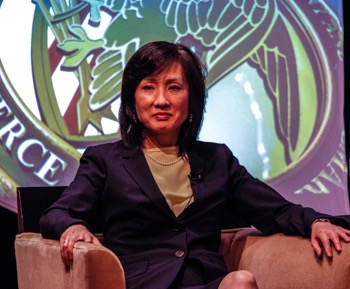 The United States Patent and Trademark Office (USPTO) recently announced that, at the direction of USPTO Director Michelle Lee (shown left), the Office is launching an initiative “to further shape and improve Patent Trial and Appeal Board (PTAB) trial proceedings, particularly inter partes review proceedings.” According to the USPTO, the purpose of the initiative is to ensure that post grant proceedings are both effective and as fair as possible.
The timing of the announcement is curious given that Michelle Lee’s days may be numbered as Director of the Office. As first reported on IPWatchdog.com, Commerce Secretary Wilbur Ross has interviewed at least three candidates for the position of Under Secretary of Commerce for Intellectual Property and Director of the United States Patent and Trademark Office: Phil Johnson, former Vice-President for Intellectual Property Strategy & Policy for Johnson & Johnson; Randall Rader, former Chief Judge of the United States Court of Appeals for the Federal Circuit; and an unidentified patent attorney characterized by one source as a “dark horse” candidate.
05.23.17 | Inter Partes Review, Patent Issues, USPTO | Gene Quinn
On the Record with Russ Slifer
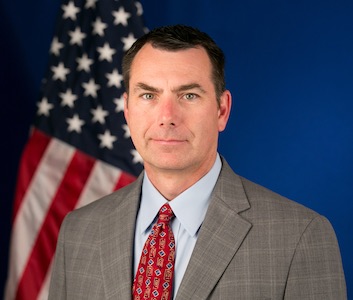 Russ Slifer is the former Deputy Under Secretary of Commerce for Intellectual Property and Deputy Director of the United States Patent and Trademark Office (USPTO). Slifer resigned from this position he held for nearly two years on Friday, January 20, 2017.
During his time at the Patent Office, I tried to get an interview with Slifer on a variety of occasions, but those efforts all went for naught. Upon his resignation, Silfer agreed to an interview, which took place via telephone on Monday, March 20, 2017. The entire 3-part interview transcript is available on IPWatchdog.com. What follows are the highlights.
Slifer on the mechnics and timing of resigning from a political appointment:
SLIFER: Each department in the Executive branch, let’s say the Department of Commerce has a White House liaison that interfaces between the political appointees that are under the Department of Commerce and the White House regarding employment issues. So when we’re approaching the end of an administration, they’re working with us on the transition out. They provided us a letter that came from the White House, let’s see, I think it was probably in December, maybe early December, that outlined that the President wanted all of our letters of resignation on file by a certain date and our intended date of departure. We were instructed that our resignation would be no later than noon on January 20th. So we basically got an instruction from the White House that they wanted everybody’s resignation letter and what it would say in it.
04.25.17 | Inter Partes Review, Patent Issues, posts, USPTO | Gene Quinn
Federal Circuit rejects Google’s petition for rehearing
On April 4, 2017, the United States Court of Appeals for the Federal Circuit issued a brief order denying panel rehearing and denying rehearing en banc in Unwired Planet, LLC v. Google, Inc.
Google filed a petition for both panel rehearing and rehearing en banc. A response to the petition was invited by the court and filed by Unwired Planet, LLC. No reason for the denial of Google’s petition was provided by the Federal Circuit, which is typical. The original panel decision, authored by Judge Reyna and issued on November 21, 2016, found that the Patent Trial and Appeal Board (PTAB) was using the wrong definition for what constitutes a covered business method (CBM) patent.
A covered business method patent is defined as a patent that claims a method for performing data processing or other operations used in the practice, administration, or management of a financial product or service. Specifically excluded from the definition of a covered business method patents are those that relate to technological inventions. See 37 C.F.R. 42.301(a). To determine whether a patent is for a technological invention, the PTAB is supposed to consider whether the claimed subject matter recites a technological feature that is novel and unobvious over the prior art, and solves a technical problem using a technical solution. See 37 C.F.R. 42.301(b). Nevertheless, the PTAB had been finding patents to be CBM patents when they covered matter incidental to a financial activity or complementary to a financial activity. For more see Federal Circuit slams PTAB.
04.24.17 | CAFC, Patent Issues, posts, USPTO | Gene Quinn
Board ends interference on CRISPR
 The Patent Trial and Appeal Board (PTAB) of the United States Patent and Trademark Office (USPTO) has issued a decision in the CRISPR patent interference pending between The Broad Institute, Inc. (the Junior Party; second filer) and The Regents of the University of California (the Senior Party; first filer). The dispute is related to U.S. Patent Nos. 8,697,359; 8,771,945; 8,795,965; 8,865,406; 8,871,445; 8,889,356; 8,895,308; 8,906,616; 8,932,814; 8,945,839; 8,993,233; 8,999,641; and U.S. Patent Application Serial No. 14/704,551.
The PTAB, in a per curiam decision, wrote:
Broad has persuaded us that the parties claim patentably distinct subject matter, rebutting the presumption created by declaration of this interference. Broad provided sufficient evidence to show that its claims, which are all limited to CRISPR-Cas9 systems in a eukaryotic environment, are not drawn to the same invention as UC’s claims, which are all directed to CRISPR-Cas9 systems not restricted to any environment. Specifically, the evidence shows that the invention of such systems in eukaryotic cells would not have been obvious over the invention of CRISPR-Cas9 systems in any environment, including in prokaryotic cells or in vitro, because one of ordinary skill in the art would not have reasonably expected a CRISPR-Cas9 system to be successful in a eukaryotic environment. This evidence shows that the parties’ claims do not interfere. Accordingly, we terminate the interference.
03.23.17 | Biotech, Patent Issues, USPTO | Gene Quinn
No Comments
06.27.17 | Patent Issues, posts, USPTO | Gene Quinn