


USPTO announces Post-Prosecution Pilot Program
 Earlier this month, the United States Patent and Trademark Office published a Notice in the Federal Register announcing a new pilot program for applications that have received a final rejection. The Post-Prosecution Pilot Program will run from July 11, 2016, through January 12, 2017, or until the Patent Office has accepted a total of 1,600 compliant requests, whichever occurs first.
According to the Patent Office, this Post-Prosecution Pilot Program responds to stakeholder input gathered during public forums held in support of the Enhanced Patent Quality Initiative. The goal is to provide another opportunity for applicants and examiners to attempt to resolve disputes without requiring an appeal or the filing of a Request for Continued Examination (RCE).
The Industry Reacts to Cuozzo Speed Technologies v. Lee
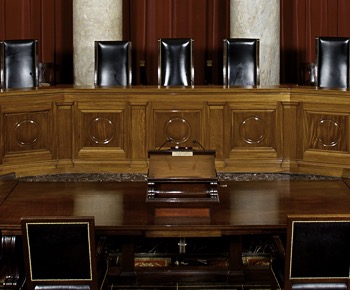 On June 20th, the U.S. Supreme Court handed down a decision in Cuozzo Speed Technologies, LLC v. Lee, which may not have wide-reaching implications on the U.S. patent landscape but will nonetheless be troubling to patent owners. In a unanimous 8-0 decision, the court upheld the ability of the Patent Trial and Appeal Board (PTAB) to apply the broadest reasonable interpretation (BRI) of patent claims during an inter partes review (IPR) proceeding. It also declared that PTAB’s use of the IPR system was not judicially reviewable.
“This is obviously a victory for some who challenge a patent’s validity in IPR proceedings since broadly construed claims are more vulnerable to attack than narrowly construed claims,” remarked Scott Daniels, partner at Westerman Hattori Daniels & Adrian, LLP. “Still, the great majority of IPR decisions do not turn on claim construction and for those cases Cuozzo simply makes no difference.”
06.30.16 | Inter Partes Review, Patent Issues, Supreme Court Cases, USPTO | Gene Quinn
Patent Office gives examiners guidance in light of Enfish
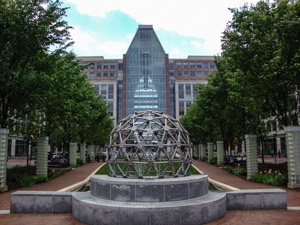 Recently, the United States Patent and Trademark Office (USPTO) sent a memo to the Examining Corps with information and instructions relating to the recent ruling in Enfish, LLC v. Microsoft Corp. by the United States Court of Appeals by the Federal Circuit. In Enfish, the Federal Circuit ruled that the software patent claims at issue were not abstract and were patent eligible. This marked the first time in 18 months, since the Court’s ruling in DDR Holdings in December 2014, that the Federal Circuit has found software patent claims to be patent eligible.
The USPTO memo was authored by Robert Bahr, who is Deputy Commissioner for Patent Examination Policy. As you would expect, it accurately explains the importance of the Federal Circuit ruling in Enfish. Bahr tells examiners that, based on the Federal Circuit ruling, they “may determine that a claim directed to improvements in computer-related technology is not directed to an abstract idea under Step 2A of the subject matter eligibility examination guidelines (and is thus patent eligible), without the need to analyze the additional elements under Step 2B.” (emphasis in the original) Bahr goes on to tell examiners that a claim that is “directed to an improvement to computer-related technology (e.g., computer functionality) is likely not similar to claims that have been previously identified as abstract by the courts.”
06.7.16 | CAFC, Patent Issues, posts, USPTO | Gene Quinn
PTAB names Medtronic CardioVascular Chief Patent Counsel as new PTAB Chief
 The United States Patent and Trademark Office (USPTO) recently announced the appointment of David P. Ruschke as the next Chief Judge for the Patent Trial and Appeal Board (PTAB). Ruschke will begin his new role at USPTO headquarters in Alexandria, VA, on May 23, 2016.
“The Patent Trial and Appeal Board plays a critical role in the patent ecosystem, especially since the launch of post-grant trials authorized in the America Invents Act of 2011,” said Under Secretary of Commerce for Intellectual Property and Director of the United States Patent and Trademark Office Michelle K. Lee. “David’s breadth of experience in global patent opposition proceedings and his deep understanding of intellectual property positions him perfectly to lead our Board well into the future.”
“Director Lee has assembled a highly talented and hard-working team at the USPTO. I am excited to have the opportunity to join the talented judges and staff of the PTAB as we work together to serve America’s inventors,” said Ruschke.
05.20.16 | Patent Issues, USPTO | Gene Quinn
New Post Grant Rules Become Effective, No Changes to Motions to Amend
 On April 1, 2016, the United States Patent and Trademark Office published final rules in the Federal Register that relate to post grant proceedings. These new final rules went into effect on May 2, 2016, and amend the existing PTAB trial practice rules pertaining to inter partes review (IPR), post grant review (PGR), covered business method (CBM) review, and derivation proceedings brought into being by provisions of the America Invents Act (AIA).
In a nutshell, these new rules change existing practice by allowing new testimonial evidence to be submitted with a patent owner’s preliminary response, adding a Rule 11-type certification for papers filed in a proceeding, allowing a claim construction approach that emulates the approach used by a district court following Phillips v. AWH Corp., 415 F.3d 1303 (Fed. Cir. 2005) for claims of patents that will expire before entry of a final written decision, and replacing the current page limit with a word count limit for major briefing. These final rules are the culmination of a process started two years ago. For more information on the changes taking effect, please see Patent Office amends PTAB Trial Practice Rules.
Many had hoped that the Office would make it easier for patent owners to successfully amend patent claims in post grant proceedings, but the Office stood firm.
05.5.16 | Inter Partes Review, Patent Issues, Post Grant Review, USPTO | Gene Quinn
No Comments
07.21.16 | Patent Issues, Patent Prosecution, USPTO | Gene Quinn