


Architect of America Invents Act announces retirement from House
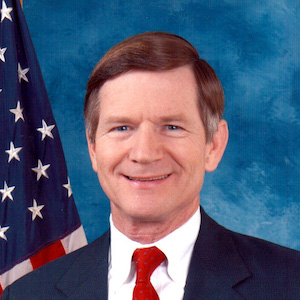 Longtime Texas Representative Lamar Smith (R-TX), chairman of the House Committee on Science, Space, & Technology, will be retiring from his duties on Capitol Hill and will not seek reelection for another term of service. Smith, a former Chairman of the House Judiciary Committee and powerful member of the Republican leadership, will leave a void. His retirement marks the end of a 30-year tenure of public service and will immediately create a leadership void on the House committee responsible for overseeing our nation’s science and space policies.
Smith was first sworn into office at the U.S. House of Representatives in 1987 and has served the 21st congressional district of Texas, which includes areas of Austin and San Antonio and parts of the Texas Hill Country, since that time. During his time in Congress, Smith has been involved with the sponsorship of legislation related to technology including the Stop Online Piracy Act (SOPA) and the STEM Education Act of 2014. Many readers of this blog will recall that Smith was an original co-sponsor to the Leahy-Smith America Invents Act (AIA) of 2011, along with Democratic Representative Patrick Leahy (D-VT). That piece of legislation created the Patent Trial and Appeal Board (PTAB), an Article I executive branch tribunal which is being challenged on constitutional grounds before the U.S. Supreme Court in Oil States Energy Services, LLC v. Greene’s Energy Group, LLC.
Eli Lilly cancer treatment upheld by PTAB
 Several weeks ago, a final written decision issued by the Patent Trial and Appeal Board (PTAB) upheld a series of 22 claims from a patent owned by Indianapolis-based drugmaker Eli Lilly & Company. This decision ends an inter partes review (IPR), which was initially petitioned by Chicago-based generic pharmaceutical firm Neptune Generics to challenge a patent covering Alimta, a drug approved by the U.S. Food and Drug Administration (FDA) as a treatment for patients with advanced nonsquamous non-small cell lung cancer (NSCLC).
The Eli Lilly patent challenged by Neptune in the IPR was U.S. Patent No. 7772209, titled Antifolate Combination Therapies. Issued in August 2010, it covers a method for administering pemetrexed disodium to a patient in need thereof by administering effective amounts of folic acid and a methylmalonic acid lowering agent followed by administering an effective amount of pemetrexed disodium; the particular methylmalonic acid lowering agent used by the treatment is vitamin B12. The use of vitamin B12 in the treatment helps to reduce the cytotoxic activity which antifolates can create in a patient’s body when that patient is undergoing chemotherapy, helping to limit the potentially life-threatening toxicity which antifolates can cause in the human body.
11.22.17 | Biotech, biotechnology patents, Patent Issues, Pharma | Gene Quinn
Drug patents fare better at PTAB
While the Patent Trial and Appeal Board (PTAB) has not been friendly to patent owners in general, the PTAB has not been inhospitable to pharma patent owners according to a report issued by BiologicsHQ, a searchable database of drugs, patents, and companies involved in PTAB inter partes review (IPR) proceedings developed by attorneys at Fitzpatrick, Cella, Harper & Scinto. The BiologicsHQ report shows a much different story in terms of drug patents facing IPR challenges at the PTAB. The report looks at a combination of data sources, including the Orange Book, Center for Drug Evaluation and Research (CDER) listed biologics and statistics on America Invents Act (AIA) trials published by the PTAB. The BiologicsHQ report draws the conclusion that, despite widespread concerns about the PTAB operating as a patent death squad in IPRs, “such concern is not justified for drug patents.”
According to the March 2017 IPR statistics issued by the PTAB, 53 percent of IPRs resolved as of March 31, 2017 were instituted; the rest were either denied institution or reached some other resolution prior to the institution decision. 35 percent of all resolved IPRs resulted in final written decisions and 23 percent led to findings of all claims unpatentable. Only 7 percent of all resolved IPRs led to final written decisions finding that no claim was unpatentable, and 5 percent led to mixed claim findings.
By contrast, drug patents fare better under PTAB scrutiny in terms of having claims upheld. Of the 4,563 resolved IPRs, BiologicsHQ reports that 222 petitions (5 percent) involved patents covering drugs listed in the Orange Book. Focusing on just the IPRs involving Orange Book patents, 44 percent were instituted and 38 percent reached a final written decision, but only 16 percent led to final written decisions where all claims were found unpatentable. No instituted claim was found unpatentable in 50 percent of final written decisions (19 percent of the total number of resolved Orange Book IPRs).
CDER-listed biologic drug patents also survive PTAB challenges better than patents not directed to pharmaceutical drugs, although the number of resolved challenges is quite small by comparison. By March 31, 2017, BiologicsHQ reports that a total of 29 resolved IPR petitions involved patents covering CDER-listed biologics. 41 percent of those petitions were instituted and 28 percent reached final written decisions. 17 percent of all resolved CDER-listed biologic drug IPRs led to final written decisions of all claims unpatentable, and 10 percent led to final written decisions of no claims unpatentable.
When comparing final written decisions among all IPRs, IPRs relating to Orange Book patents, and IPRs relating to CDER-listed biologic drug patents, Orange Book and CDER-listed biologic drug patents are more likely to escape with all claims intact. For all resolved IPRs, 23 percent led to final written decisions of all claims unpatentable. That’s a higher percentage than the 16 percent of Orange Book IPRs, and 17 percent of CDER-listed biologic drug IPRs that led to final written decisions where all claims are unpatentable. The 7 percent of all IPRs that led to final written decisions of no claims unpatentable is less than the 10 percent of CDER-listed biologic drug IPRs, and the 19 percent of Orange Book IPRs, that met the same fate.
Overall, 58 percent of IPRs involving drug patents resolved by the PTAB resulted in some claims remaining patentable: 60 percent for Orange Book IPRs and 45 percent for CDER-listed biologic IPRs.
11.22.17 | Biotech, biotechnology patents, Patent Issues, Pharma | Gene Quinn
House Budget Committee recommends USPTO be independent agency
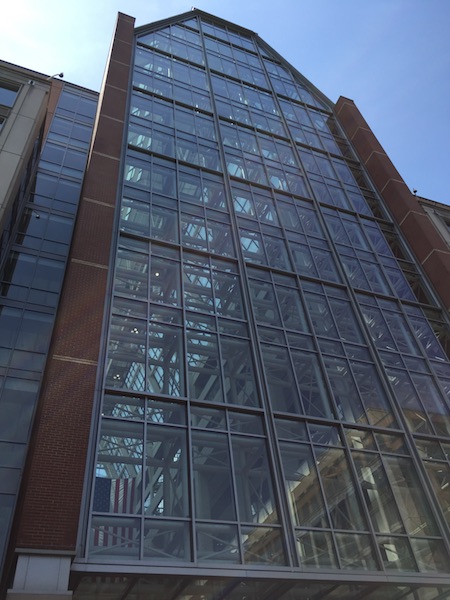 The House Budget Committee recently released a non-binding budget blueprint titled Building a Better America: A Plan for Fiscal Responsibility. As a part of this proposed fiscal year 2018 budget, the House Budget Committee is proposing that the United States Patent and Trademark Office (USPTO) be made an independent agency.
On page 50 of the House budget proposal, under a heading discussing the elimination of overlapping Department of Commerce functions and consolidating necessary Department of Commerce functions into other Departments, the proposal includes the line item: “Establish the U.S. Patent and Trademark Office as an independent agency.” No further information is provided relating how that might be accomplished. The budget proposal does say, however, that the Commerce Department and its various agencies “are rife with waste, abuse, and duplication,” which is why House Republicans are recommending a different approach for the federal government supporting commerce moving forward.
11.21.17 | Patent Issues, USPTO | Gene Quinn
Judge finds Allergan patents invalid in Eastern District of Texas and opines on sovereign immunity issue
 Recently, in a 135-page opinion, Judge William C. Bryson (left), sitting by designation as a trial judge for the United States Federal District Court for the Eastern District of Texas, found that Allergan’s RESTASIS patents were infringed by Teva Pharmaceuticals USA, but that Teva had demonstrated invalidity of those RESTASIS patents by clear and convincing evidence.
“We are disappointed by the Federal District Court’s decision on the RESTASIS® patents. We are carefully reviewing the decision and are considering all options,” said Robert D. Bailey, Chief Legal Officer for Allergan. “Allergan remains committed to vigorously defending the intellectual property of our products, which allows us to continue to invest in developing and bringing forward new medicines for millions of patients.”
The patents include United States Patent Nos. 8,629,111; 8,648,048; 8,685,930 and 9,248,191. These patents, along with United States Patent Nos. 8,633,162 and 8,642,556, are listed in the Orange Book for RESTASIS® and expire on August 27, 2024.
11.20.17 | Patent Issues, Patent Litigation | Gene Quinn
PLI Recommends

- Live Seminar
- Featured Treatise
- Live Seminar
IPWatchdog


No Comments
11.27.17 | America Invents Act, Patent Issues, Patent Reform | Gene Quinn