


Top 5 Patent Law Blog Posts of the Week
 Today we continue our weekly installment highlighting the best of the patent blogosphere from the past week. If there are any patent blogs you think should be highlighted by our Top 5, please comment on this post and we’ll check them out.
1) Chicago IP Litigation Blog: Court Finds Claim Preamble Limiting – This post reports on the matter of The Metraflex Co. v. Flex-Hose Co., No. 10 C 302, Slip Op. (N.D. Ill. Sep. 8, 2011). It discusses how Judge Leinenweber construed the claims of the patent related to displaying a product selection on a website by highlighting the specific definitions reached upon by the court.
2) Patently-O: Federal Circuit Continues Split on Patentable Subject Matter – This post notes how the Federal Circuit decided in Myspace, Inc. v. GraphOn Corp. (Fed. Cir. 2012), once again not reaching a set standard regarding patentable subject matter. “The majority opinion here – penned by Judge Plager and joined by Judge Newman – argues that courts should avoid the metaphysical question of whether an invention is unpatentably abstract whenever possible and instead focus on the conditions of patentability found in §§ 102, 103, and 112 of the patent act.” (more…)
Post-Grant USPTO Proceedings Seminar Live Blog: A View from the Bench on Concurrent PTO Proceedings
 Welcome back to the last Post-Grant USPTO Proceedings Seminar live blog of the day! The last panel of the afternoon is entitled Judges’ Panel: A View from the Bench on Concurrent PTO Proceedings. Our featured judicial panelists are Hon. Garrett E. Brown, Jr., Chief Judge, United States District Court, District of New Jersey; Hon. Theodore R. Essex, Administrative Law Judge, United States International Trade Commission; and Hon. Gerald Bruce Lee, District Judge, United States District Court, Eastern District of Virginia. Below are some the highlights:
02.3.12 | PLI Patent Programs, posts, USPTO | Mark Dighton
Chief Judge Rader to Speak at Patent Law Institute on All-Star Panel!
Patent law heavyweights will convene for what looks to be two very special days in New York City at PLI’s 6th Annual Patent Law Institute on February 16-17th.
 Chief Judge Randall Rader of the Federal Circuit will participate in an all-star dialogue panel between the bench and bar along with United States District Judge William Young and nationally-recognized expert practitioners Donald Dunner, Seth Waxman and Dean John Whealan of the George Washington University Law School.
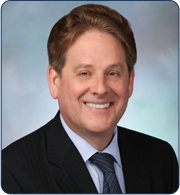 Robert Stoll, who recently retired as Commissioner for Patents at the USPTO, is slated to open the program with a PTO keynote address. Commissioner Stoll is expected to report the latest developments regarding the PTO’s on-going implementation of the America Invents Act and other critical PTO developments.
Co-Chairs Scott M. Alter (Faegre Baker Daniels LLP), Douglas R. Nemec (Skadden, Arps, Slate, Meagher & Flom LLP) and John M. White (Berenato & White; Director of Patent Professional Development, Practising Law Institute) will navigate attendees through 6 exciting plenary sessions that discuss the practice impacts of recent Supreme Court and Federal Circuit decisions, AIA changes, current critical patent issues from the corporate counsel perspective, views from the District Court bench, the never-ending PTO changes and for good measure, an hour of legal ethics credit! (more…)
Patentee’s Arguments in Reexamination Create Intervening Rights Erasing $29.4 Million Verdict
 Scott Daniels, Partner at Westerman, Hattori, Daniels & Adrian and Practice Center Contributor, sent in this article discussing Tuesday’s CAFC decision in the Marine Polymer Techs. v. HemCon case. In a decision that seems to encourage reexamination, the Court held that “intervening rights” apply to unamended claims based on statements made during reexamination. Daniels discusses the history of the case and highlights the key points of the CAFC decision.
The CAFC panel decision [Tuesday] in Marine Polymer Techs. v. HemCon will do more to popularize reexamination than all the proselytizing by all the reexamination lawyers and bloggers ever could. The Court held that an argument made by the patentee traversing a rejection in reexamination constituted a disclaimer of patented subject matter; this disclaimer triggered absolute intervening rights for the accused infringer under 35 U.S.C. §§ 252 and 307(b), thereby eliminating all damages for the period before the issuance of the reexamination certificate. The Court also suggested that the accused infringer might also be protected by equitable intervening rights for the period after issuance of the reexamination certificate and sent the case back to the trial court for further fact-finding. (more…)
09.29.11 | biotechnology patents, CAFC, Patent Litigation, Reexamination | Stefanie Levine
Can the ITC Keep Pace?
Written by Brandon Baum, of Baum Legal and Practice Center Contributor.
The ITC caseload has grown significantly in recent years.

Moreover, the Federal Circuit’s decision in Kyocera Wireless v. ITC limiting the downstream effect of ITC exclusion orders means complainants frequently name multiple parties when initiating complaints. Thus, the cases are far larger and more complex. The pace appears to be quickening as well, as there were 28 new 337 complaints filed between June and August, and the ITC website shows 71 cases currently pending. Many of these are “battle of the titans” type cases, involving major industry players with virtually unlimited legal budgets (e.g., various pending smartphone investigations are illustrated below). (more…)
09.19.11 | ITC, posts | Stefanie Levine
No Comments
03.9.12 | Federal Circuit Cases, posts | Mark Dighton