


Take a Picture, It’ll Last Longer: The Role of Kodak’s Patent Portfolio in its Bankruptcy
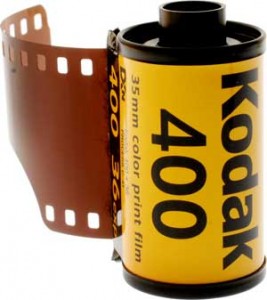 As the progression of technology has proven before, film has gone the way of the VHS, tape cassette, and arguably the paper back novel. On January 19, 2012, Eastman Kodak filed for Chapter 11 bankruptcy protection in U.S. Bankruptcy Court in the Southern District of New York. Kodak made the transition from basing its company on film to digital, but it wasn’t enough. Citigroup will be lending the company $950 million in financing to maintain daily operations. After reviewing Kodak’s bankruptcy court documents, it has become clear that it is Kodak’s juicy patent portfolio that has not only burdened the company but will also hopefully sustain the company as it goes through bankruptcy.
What is interesting about Kodak’s patent portfolio is that one would assume having an estimated $3 billion dollars worth of intellectual property, including digital image capturing patents, would have saved the company from ever having to declare bankruptcy in the first place, especially considering Kodak was the first to invent the digital camera in 1975. As it turns out, the inability to enforce patent licensing rights and infringement damages cost the company more than their impressive patent portfolio could salvage. (more…)
Starbucks’ Mobile Payment Technology Gets Patent Holder Steamed
 Maxim Integrated, a California semiconductor company, filed a patent infringement suit against Starbucks in the U.S. District Court in the Eastern District of Texas alleging the Starbucks Card Mobile, Starbucks for iPhone and Starbucks for Android applications infringed upon four of Maxim Integrated’s patents. The patents in question describe mobile payment methods “for enabling a user to fill a portable module with a cash equivalent and to spend the cash equivalent at a variety of locations” and as an “electronic module [that] is capable of passing information back and forth between a service provider’s equipment via a secure, encrypted technique so that money and other valuable data can be securely passed electronically.”
Starbucks isn’t the only recipient of the mobile payment app infringement claim. Maxim Integrated also filed similar patent infringement suits against Expedia Inc. and Capital One Financial Group. According to paidContent.org,
The activities described in the patents seem to encompass activities inherent to any mobile payments operation. Moreover, Maxim is asserting them across different platforms. In its complaints, it singles out apps like “Expedia Hotels for Android” and “Capital One Mobile Banking for Android” in addition to iPhone and iPad apps. (more…)
01.16.12 | patent infringement | Mark Dighton
Patent Infringement Doesn’t Pay…Unless You’re Verizon, in Which Case You Owe $11 Million a Month for the Next 6 Months
 The National Law Journal reports that starting December 16, 2011, Verizon must pay $2.74 per every FiOs customer each month as “sunset royalties” for their continued use of technology deemed to be infringing patents belonging to ActiveVideo. The U.S. District Court for the Eastern District of Virginia had ruled in August 2011 that Verizon infringed four of ActiveVideo’s patents regarding interactive TV and video-on-demand applications. Verizon would have to pay “sunset royalties” for its continued use of the technology until it changed its internal system. Last week, the same court denied a motion from Verizon to stay having to pay “sunset royalties” pending an appeal. (more…)
12.19.11 | patent infringement, posts | Mark Dighton
Scott McKeown on Which Comes 1st: The USPTO or the Court?
 The hierarchy of the U.S. court system is well established, but recent patent law cases have challenged this hierarchy with the power of government agency – the USPTO to be exact. Scott McKeown, Partner at Oblon, Spivak, Practice Center Contributor and author of Patents Post Grant Blog, recently wrote two articles concerning the USPTO’s reexamination process and how its parallel nature to patent infringement cases resulted in conflict that’s occurred with the U.S. Court of Appeals of the Federal Circuit (CAFC) as well as with the U.S. District Court in the District of Connecticut. Scott explains the patent law issue:
Patent reexamination is often initiated in parallel with an ongoing infringement litigation. In the case of a parallel inter partes proceeding (IPX), the first of the proceedings to conclude (litigation or IPX) controls the outcome of the other by operation of statutory estoppel. As such, a final holding in the parallel court proceeding will end an ongoing IPX. Moreover, the losing party would be precluded from seeking IPX at a later date.
On the other hand, ex parte patent reexamination (EXP) has no such statutory “shut off valve.” Thus, even a party that was bound by IPX estoppel could file a request for ex parte patent reexamination. In this way, the infringer could attempt to “undo” the effect of the earlier, final, court judgement by invalidating the patent via the EXP filing. (more…)
12.15.11 | CAFC, District Court Cases, Federal Circuit Cases, posts, USPTO | Mark Dighton
ITC on HTC: The Possible U.S. Ban on Android Phones
 Tomorrow, the International Trade Commission will issue its decision regarding whether or not HTC infringed Apple’s patents in producing Android phones. Six months ago, an ITC administrative law judge ruled that HTC had in fact infringed Apple’s patents. The decision to come down this Wednesday, December 14, is in response to HTC’s appeal. The patents in question are U.S. Patent No. 5,946,647, a patent on a “system and method for performing an action on a structure in computer-generated data”, and U.S. Patent No. 6,343,263, a patent on a “real-time signal processing system for serially transmitted data”. Essentially, these patents are at the core of the Android operating system, which means that HTC may not be the only manufacturer to be impacted by the ITC’s decision as they are not the only ones using the Android system. (more…)
12.13.11 | ITC, patent infringement, Patent Litigation | Mark Dighton
No Comments
01.23.12 | Patent Issues, Patent Licensing | Mark Dighton