


The Best of the Post-Grant USPTO Proceedings Seminar
 In case you missed it, PLI hosted a seminar entitled Post-Grant USPTO Proceedings 2012- The New Patent Litigation and the topics discussed by the day’s panelists proved to serve as both a refresher on the language of the new law as well as an enlightening course on what the developments in practice have and will become. If there was a trend throughout the day, it would be that patent professionals need to become familiarized with the changes in patent law in order to streamline their time and resources into more efficient patent applications and to facilitate the litigation process. Requirements that had become common place in patent law are no longer on the books, but a patent practitioner would not know this unless they studied the America Invents Act provision by provision – or unless they attended PLI’s seminar.
To show you the range of topics that were discussed, here are some of the highlights from each panel of the seminar. The course handbook is still available, and the video recording of the entire seminar will be made available soon for On Demand viewing on the PLI website. (more…)
Chief Judge Rader to Speak at Patent Law Institute on All-Star Panel!
Patent law heavyweights will convene for what looks to be two very special days in New York City at PLI’s 6th Annual Patent Law Institute on February 16-17th.
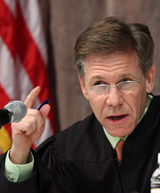 Chief Judge Randall Rader of the Federal Circuit will participate in an all-star dialogue panel between the bench and bar along with United States District Judge William Young and nationally-recognized expert practitioners Donald Dunner, Seth Waxman and Dean John Whealan of the George Washington University Law School.
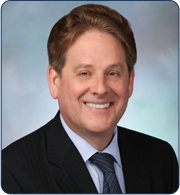 Robert Stoll, who recently retired as Commissioner for Patents at the USPTO, is slated to open the program with a PTO keynote address. Commissioner Stoll is expected to report the latest developments regarding the PTO’s on-going implementation of the America Invents Act and other critical PTO developments.
Co-Chairs Scott M. Alter (Faegre Baker Daniels LLP), Douglas R. Nemec (Skadden, Arps, Slate, Meagher & Flom LLP) and John M. White (Berenato & White; Director of Patent Professional Development, Practising Law Institute) will navigate attendees through 6 exciting plenary sessions that discuss the practice impacts of recent Supreme Court and Federal Circuit decisions, AIA changes, current critical patent issues from the corporate counsel perspective, views from the District Court bench, the never-ending PTO changes and for good measure, an hour of legal ethics credit! (more…)
Patent Post-Grant Options – The New AIA Regime
 Post-grant review proceedings of the USPTO were pursued in record number in 2011. In response, the America Invents Act introduced new options for patent reexamination such as Post-Grant Review, Inter Partes Review (formerly inter partes patent reexamination) Derivation, a special post-grant review for “business method” patents and Supplemental Examination. Whether your job requires management of a patent portfolio or advising clients in disputes that involve or may lead to patent litigation, the changes brought forth by the AIA are incredibly relevant.
PLI is responding to these changes by providing a seminar focused on these new patent post-grant options. On February 3rd, the seminar entitled “Post-Grant USPTO Proceedings 2012 – The New Patent Litigation” will be held at the New York PLI Center and online via a live webcast! Gain valuable practice insights concerning the new America Invents Act (AIA) post-grant USPTO proceedings directly from experienced practitioners on the program’s stellar faculty including:
Brian Hanlon, Director of the Office of Patent Legal Administration;
Irem Yucel, Director of the Central Reexamination Unit (CRU);
BPAI’s Chief Administrative Patent Judge James Donald Smith;
U.S. Chief Judge Garrett E. Brown and District Judge Gerald Bruce Lee; and
ITC Administrative Law Judge Theodore R. Essex (more…)
01.17.12 | America Invents Act, USPTO | Mark Dighton
Point – Counterpoint: The Debate Over Prior User Rights
Written by Gene Quinn, of IPWatchdog and Practice Center Contributor.
Since prior user rights first came up as an issue in the patent reform debate I have been opposed to the idea. Whether I like prior user rights or not, the reality is that prior user rights are now a part of U.S. patent law. Nevertheless, the debate goes on about whether prior user rights are a good idea. In fact, the United States Patent and Trademark Office is tasked through the America Invents Act with conducting a Prior User Rights Study. To facilitate this study a public hearing on prior user rights was held on October 25 in the Madison Auditorium at its Alexandria, Virginia campus of the USPTO.
With this in mind I thought I would once again revisit prior user rights. One of the arguments I have heard recently supporting prior user rights is that a corporation that is going to invest billions of dollars into a facility should know that their investment is safe and that the plant can’t be shut down by a later filed patent application. This argument is so specious as to be nearly laughable if you ask me. This strikes me as just more of corporate America wanting the government to save them from themselves.
Click here for IPWatchdog’s full article.
11.1.11 | America Invents Act, Patent Reform, posts, Prior Use Rights | Stefanie Levine
America Invents: A Simple Guide to Patent Reform, Part 2
 Written by Gene Quinn, of IPWatchdog and Practice Center Contributor.
I have done quite a bit of writing about the America Invents Act, but I have been a bit derelict in providing the sequel to America Invents: A Simple Guide to Patent Reform, Part 1. Part of the reason, if not the entirety of the reason, is that the major parts of the American Invents Act that remain are anything but simple.
I was speaking with John White via telephone yesterday about the America Invents Act. Yes, John and I are thoroughly immersed in this legislation and coming up with wrinkle after wrinkle that you probably never thought about. Fun I know, but that is what two wild, crazy and tremendously charismatic patent attorneys talk about! In any event, I told him I was having difficulty and asked him — how do you describe prior user rights, post-grant review and supplemental examination simply? His response: “You don’t.” We went on to talk about how first to file isn’t all that simple either, although the name suggests otherwise. This thing, the monstrosity that is the America Invents Act, will be a full employment act for lawyers! But when is it ever good for clients when it is good for the attorneys?
In any event, on this note I embark upon Part 2, which will seek to make sense of prior user rights, post-grant review, preissuance submission and patentability changes. This will leave inter partes review, supplemental examination and derivation proceedings for the finale — Part 3. I will endeavor to describe these in the most straight forward way possible, but I am going to completely punt on Section 18 as it pertains to business methods and post-grant review, at least for now. I just see no way to explain that in a “simple” way. Notwithstanding, look for an article on Section 18 soon (a relative term I know), along with an article about specific peculiarities and likely unintended consequences of the Act.
Click here for Gene Quinn’s full article on IPWatchdog.
10.14.11 | America Invents Act, Patent Reform | Stefanie Levine
No Comments
02.7.12 | PLI Patent Programs | Mark Dighton