


Predictions and Musings on 2018
 Each year, I ask a panel of industry experts to make predictions for the upcoming year, and to identify particular news, stories or events they will be watching with interest. See Predictions for 2018 and Topics to Watch in 2018.
Given that several industry insiders were willing to make their own predictions, it seems only fair for me to likewise go out on a limb and make my own predictions.
First, I predict that the United States Supreme Court will find post grant procedures under the America Invents Act to be unconstitutional. It is my belief they took Oil States not as a patent case, but rather as an Administrative State case, and if that is correct, this could be the first in a series of decisions over a number of years that will pull authority back from the growing Administrative State and toward the Judiciary.
PTAB denies claims of 11th Amendment sovereign immunity
 Several weeks ago, the Patent Trial and Appeal Board (PTAB) of the United States Patent and Trademark Office (USPTO) denied a motion filed by the University of Minnesota in a series of inter partes review (IPR) cases. See Order Denying Patent Owner’s Motion to Dismiss. This extraordinary denial of the motion is newsworthy because Minnesota sought a dismissal of the IPRs based on Eleventh Amendment sovereign immunity. The PTAB previously dismissed similar IPRs against state-owned patents. Here, however, the PTAB in a majority opinion authored by Chief Judge David Ruschke (pictured left), disagreed and refused to dismiss the IPRs.
The PTAB ruled that the University of Minnesota “waived its Eleventh Amendment immunity by filing an action in federal court alleging infringement of the patent being challenged in this proceeding.”
01.11.18 | Inter Partes Review, Patent Issues, USPTO | Gene Quinn
Rovi wins at ITC over Comcast
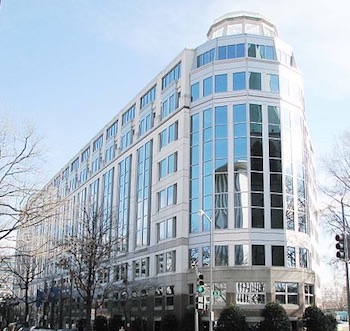 The U.S. International Trade Commission has issued a final determination finding a violation of section 337 in a matter dealing with infringement of patents owned by Rovi Corporation. As a result of the investigation, the ITC issued a limited exclusion order prohibiting importation of certain digital video receivers and hardware and software components, and also issued cease and desist orders directed to the Comcast respondents. This final determination concludes the matter at the ITC and the investigation is now terminated, with this final determination submitted to President Trump for his review.
The Commission instituted this investigation on May 26, 2016, based on a complaint filed by Rovi Corporation and Rovi Guides, Inc. (collectively, “Rovi”), both of San Carlos, California. The complaint alleged violations of section 337 of the Tariff Act of 1930, codified at 19 U.S.C. 1337 (“section 337”). Rovi asserted infringement of U.S. Patent Nos. 8,006,263; 8,578,413; 8,046,801; 8,621,512; 8,768,147; 8,566,871; and 6,418,556.
Prior to the evidentiary hearing, Rovi withdrew certain allegations, but proceeded at the evidentiary hearing on the following patents and claims: claims 7, 18, and 40 of the ’556 patent; claims 1, 2, 14, and 17 of the ’263 patent; claims 1, 5, 10, and 15 of the ’801 patent; claims 12, 17, and 18 of the ’871 patent; claims 1, 3, 5, 9, 10, 14, and 18 of the ’413 patent; and claims 1, 10, 13, and 22 of the ’512 patent.
On May 26, 2017, the administrative law judge (the “ALJ”) issued the final initial determination, which found a violation of section 337 by Respondents in connection with the asserted claims of both the ’263 and ’413 patents. After examining the record in this investigation, the Commission affirmed the final initial determination conclusion that Comcast violated section 337 in connection with the asserted claims of the ’263 and ’413 patents. The Commission also affirmed the conclusion that Comcast’s customers directly infringe the ’263 and ’413 patents. (more…)
12.21.17 | ITC, Patent Issues | Gene Quinn
Andrei Iancu unanimously approved by Senate Judiciary Committee
 On Thursday, December 14, 2017, President Trump’s nominee to become the new Under Secretary of Commerce for Intellectual Property and the Director of the United States Patent and Trademark Office was unanimously approved by the Senate Judiciary Committee.
“Mr. Iancu has a proven record in the field of intellectual property law,” Senator Chuck Grassley (R-IA) said moments before the vote. “He has an excellent academic and professional background in intellectual property law. He’s extremely knowledgeable about the patent system. He’s well respected in the legal community.”
“We congratulate Mr. Iancu on his support from the U.S. Senate Judiciary Committee to be Director of the U.S. Patent and Trademark Office,” said Innovation Alliance Executive Director Brian Pomper. “We believe he will heed the views of independent inventors, entrepreneurs, and various industry groups—all those that form our U.S. innovation ecosystem.” Pomper would go on to urge the full Senate to approve the Iancu nomination as soon as possible. “We look forward to working with Mr. Iancu in creating a strong and stable U.S. intellectual property landscape for entities of all sizes, enabling the U.S. to reassert its position as an international leader in innovation,” Pomper said. (more…)
12.19.17 | Congress, USPTO | Gene Quinn
Architect of America Invents Act announces retirement from House
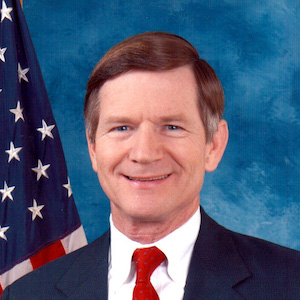 Longtime Texas Representative Lamar Smith (R-TX), chairman of the House Committee on Science, Space, & Technology, will be retiring from his duties on Capitol Hill and will not seek reelection for another term of service. Smith, a former Chairman of the House Judiciary Committee and powerful member of the Republican leadership, will leave a void. His retirement marks the end of a 30-year tenure of public service and will immediately create a leadership void on the House committee responsible for overseeing our nation’s science and space policies.
Smith was first sworn into office at the U.S. House of Representatives in 1987 and has served the 21st congressional district of Texas, which includes areas of Austin and San Antonio and parts of the Texas Hill Country, since that time. During his time in Congress, Smith has been involved with the sponsorship of legislation related to technology including the Stop Online Piracy Act (SOPA) and the STEM Education Act of 2014. Many readers of this blog will recall that Smith was an original co-sponsor to the Leahy-Smith America Invents Act (AIA) of 2011, along with Democratic Representative Patrick Leahy (D-VT). That piece of legislation created the Patent Trial and Appeal Board (PTAB), an Article I executive branch tribunal which is being challenged on constitutional grounds before the U.S. Supreme Court in Oil States Energy Services, LLC v. Greene’s Energy Group, LLC.
11.27.17 | America Invents Act, Patent Issues, Patent Reform | Gene Quinn
No Comments
01.16.18 | Patent Issues | Gene Quinn