


Top 5 Patent Law Blog Posts of the Week
 Today we continue our weekly installment highlighting the best of the patent blogosphere from the past week. If there are any patent blogs you think should be highlighted by our Top 5, please comment on this post and we’ll check them out.
1) IP Watchdog: Patent Drawings: An Economical Way to Expand Disclosure – This post discusses the importance of including patent drawings within patent applications that show every feature of the invention specified in the claims, and explains when and where the applications would best serve the applicant.
2) Chicago IP Litigation Blog: Determining Senior User is Not an Issue for Motion to Dismiss – This post reports on Arcadia Group Brands Ltd. v. Studio Moderna SA, No. 10 C 7790, Slip Op. (N.D. Ill. Aug. 15, 2011), including both parties’ arguments as well as the judge’s decision. (more…)
Patent Docs: Top Biotech/Pharma Patent Stories of 2011
 We are pleased to share the latest from our friends at PatentDocs.org, the Biotech and Pharma Patent Law and News Blog. The authors, Donald Zuhn and Kevin Noonan, are partners at McDonnell Boehnen Hulbert & Berghoff, LLP, and contribute to Patent Docs on a daily basis. Today’s post comes from Patent Docs’ fifth annual list of the top biotech/pharma patent stories covered by Patent Docs in 2011. These stories were selected based on their potential to have the greatest impact on biotech/pharma patent practitioners and applicants.
Below is the post that covers the stories ranked numbers 12- 10. For access to the entire list of the top biotech/pharma stories of the past year, click here. (more…)
02.2.12 | Patent Blogs | Mark Dighton
Chief Judge Rader to Speak at Patent Law Institute on All-Star Panel!
Patent law heavyweights will convene for what looks to be two very special days in New York City at PLI’s 6th Annual Patent Law Institute on February 16-17th.
 Chief Judge Randall Rader of the Federal Circuit will participate in an all-star dialogue panel between the bench and bar along with United States District Judge William Young and nationally-recognized expert practitioners Donald Dunner, Seth Waxman and Dean John Whealan of the George Washington University Law School.
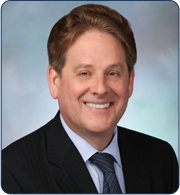 Robert Stoll, who recently retired as Commissioner for Patents at the USPTO, is slated to open the program with a PTO keynote address. Commissioner Stoll is expected to report the latest developments regarding the PTO’s on-going implementation of the America Invents Act and other critical PTO developments.
Co-Chairs Scott M. Alter (Faegre Baker Daniels LLP), Douglas R. Nemec (Skadden, Arps, Slate, Meagher & Flom LLP) and John M. White (Berenato & White; Director of Patent Professional Development, Practising Law Institute) will navigate attendees through 6 exciting plenary sessions that discuss the practice impacts of recent Supreme Court and Federal Circuit decisions, AIA changes, current critical patent issues from the corporate counsel perspective, views from the District Court bench, the never-ending PTO changes and for good measure, an hour of legal ethics credit! (more…)
Preparing for the Patent Bar Exam Changes
 The following post is written by Mark Dighton, PLI’s Director of Law School Relations and Administrative Director of the Patent Bar Review.
If all goes as planned, the Patent Office will start on Tuesday, January 31st, to test on the PTO’s Registration Exam (sometimes called “the patent bar exam”) some of the first changes to US patent law resulting from the America Invents Act, as well as some changes to the appeals rules that had been in the works even before Patent Reform. The new appeals rules did not even become effective until January 23, 2012. Testing them only eight days later demonstrates clearly that the Patent Office is good to their word that they expect the Exam to more accurately reflect current practice going forward. (For many years, the Exam was YEARS behind current practice. Seemingly almost an afterthought.)
The changes from the America Invents Act already subject to testing are the new rules that permit prioritized examination of patent applications (Track I) and revise the standard for granting inter partes reexamination requests. (more…)
01.30.12 | Patent Bar Exam, PLI Patent Bar Review Course | Mark Dighton
Top 5 Patent Law Blog Posts of the Week
 Today we continue our weekly installment highlighting the best of the patent blogosphere from the past week. If there are any patent blogs you think should be highlighted by our Top 5, please comment on this post and we’ll check them out.
1) Patents Post-Grant: Supplemental Examination Rules Issued by USPTO – This post breaks down the USPTO’s Notice of Proposed Rule Making and how it outlines the procedures for conducting supplemental examination.
2) IP Watchdog: Business Methods by the Numbers: A Look Inside PTO Class 705 -As Gene Quinn explains, “The United States Patent Classification System is a system for organizing all U.S. patents into a smaller sub-collection of patents based on common subject matter. Each subject matter division includes a major component, which is called a class, and a minor component, which is called a subclass.” This post discusses Class 705, which is the generic class for innovations relating to business methods.
3) Patent Docs: The Medicines Company to Get Patent Term Extension – This post provides a breakdown of the settlement of litigation reached between the Medicines Company and APP Pharmaceuticals, and gives a detailed case background and procedural history explaining how the parties reached their final settlement.
4) The Tech Transfer Blog: New Pact Brings “Express” Licensing Concept to Sponsored Research Agreements – Binghamton University (my alma mater) developed what it is calling the Binghamton Express Square Terms or BEST Deal License, a nonexclusive, royalty-free license on patentable innovations that arise from sponsored research. This post explains how this express licensing is intended to benefit the sponsored research negotiating process while also establishing standards and predictability for its industry partners.
5) FOSS Patents: Samsung allowed to show Apple-Qualcomm contracts, letters and limited source code to foreign courts – This post details the impact of Samsung’s discovery request being granted in its case with Qualcomm and how the U.S. District Court came to its decision. The post also compares the Samsung-Qualcomm matter with the Apple-Qualcomm matter.
01.27.12 | posts, USPTO | Mark Dighton
No Comments
02.3.12 | ITC, Patent Applications, posts, USPTO | Mark Dighton