


Will the Federal Circuit Reconsider Ariosa v. Sequenom en banc?
 On June 12, 2015, the United States Court of Appeals for the Federal Circuit issued a decision in Ariosa Diagnostics, Inc. v. Sequenom, Inc. The Federal Circuit decision has been widely criticized (see here and here, for example). Sequenom has asked for reconsideration en banc, with 12 separate amici filers in support of Sequenom’s petition for reconsideration en banc.
The original panel decision dealt with whether a non-invasive method for detecting paternally inherited cell-free fetal DNA (“cffDNA”) from a blood sample of a pregnant woman was patentable. See U.S. Patent No. 6,258,540. The district court ruled that the method claims were patent ineligible and the Federal Circuit agreed. Judge Linn was uncomfortable with the decision, but wrote in a concurrence that he thought that the outcome was mandated by the “sweeping language of the test set out in Mayo.”
Sequenom has retained Tom Goldstein, co-founder of the SCOTUS blog, to handle the appeal. Goldstein has served as counsel in over 100 Supreme Court cases over the last 15 years. His presence sends a clear message that Sequenom is heading to the Supreme Court if they do not prevail in an en banc rehearing.
Aviation Innovation
We recently published an article about the pursuit of green aviation technologies on IPWatchdog.com. In researching for that article we found a number of interesting aviation innovations that did not squarely fit within the “green” umbrella.
For example, U.S. Patent No. 9096315, titled Apparatus for Recovering Kinetic Energy Released During Landing of an Aircraft After Contact with the Ground, and Method, issued to Airbus Operations of Hamburg, Germany. The apparatus for recovering kinetic energy during landing claimed here has an energy converter located in the nose landing gear or main landing gear; the energy converter has a compressed air container and a heat exchanger to create a thermal storage system. This technology is designed to collect some of the kinetic energy created when an aircraft lands and brakes in order to be used by the craft when it is taxied on the ground. This patent will certainly catch the attention of individual inventors who, at least based on my communications with inventors over the years, are always looking for ways to capture and use kinetic energy as a part of a vehicle, such as an automobile or truck.
According to U.S. Patents No. 9096314,the history of electric aircraft can trace its roots back to a French dirigible from 1884, which is interesting in and of itself. But the ‘314 patent, issued under the title Electric VTOL Aircraft, protects a vertical take-off and landing (VTOL) aircraft having a system of electrically powered ducted fans which have their thrust controlled by a fan-driving motor; the system of fans is comprised of two pluralities of fans, one with a diameter which is 1.5 times the size of the other. The configuration of this fan system is intended to improve upon both the flight stability and the safety of conventional VTOL craft.
A family trio of inventors has developed a better technique for supplying power to electric aircraft, detailed within U.S. Patent No. 9090170, which is titled Self-Charging Electric Vehicle and Aircraft and Wireless Energy Distribution System. This patent was issued by the U.S. Patent and Trademark Office to Alex, David and Rena Mashinsky, all of Memphis, TN. It protects an electric-vehicle charging system with a secondary resonant coil connected to an electric vehicle and tuned to the same resonant frequency as a primary coil outside the vehicle and connected to a source of electrical power as well as a power-management system with a software module configured to control the power transfer rate. This system is a wireless inductive charging system much like ones we recently profiled in a recent IPWatchdog piece on wireless charging in electric automobiles.
Another electric aircraft technology is described within U.S. Patent Application No. 20150115108, issued under the title Aircraft Electric Motor System. This patent application, assigned to the Boeing Company, would protect an apparatus comprised of a controller that identifies an electric aircraft’s state as well as a group of recharging parameters based on the state of the aircraft’s electric motors for controlling the recharging of the power source. This system is intended to better monitor the performance of batteries powering motor equipment on an electric aircraft so that they can be replaced on a more effective schedule.
Finally, we found a patent application covering an innovation that utilizes data analysis for better fuel performance in airliners. U.S. Patent Application No. 20150134187, titled Robust Systems and Methods for Improving Passenger Jet Aircraft Fuel Economy, filed by Alaska Airlines, Inc. (NYSE:ALK), of Seattle, WA, would protect a method for improving fuel economy on a passenger jet aircraft by receiving information from the craft including an exhaust gas temperature value for an auxiliary power unit in operation. The method determines whether the exhaust gas temperature value exceeds a certain threshold, sending a communication indicating an aircraft’s status for a future flight if the threshold temperature isn’t exceeded and updating a database to reflect changes in the aircraft’s status. This innovation enables the more effective use of auxiliary power units that provide power to subsystems on passenger jet aircraft by operating that unit only when required.
09.17.15 | Patent Issues | Gene Quinn
USPTO proposes new rules for PTAB administrative trials
Several weeks ago, the United States Patent and Trademark Office published proposed rule changes that will, if adopted, amend the rules for practice before the Patent Trial and Appeal Board (PTAB). The deadline to comment on the USPTO proposed rule changes will be 60 days after publication in the Federal Register, which should be Monday, October 19, 2015. Comments should be sent by electronic mail message over the Internet addressed to: trialrules2015@uspto.gov. Comments may also be submitted by mail addressed to: Mail Stop Patent Board, Director of the United States Patent and Trademark Office, P.O. Box 1450, Alexandria, VA 22313-1450, marked to the attention of Lead Judge Susan Mitchell, Patent Trial Proposed Rules.
Claim Construction
In the initial request for comments, the Office asked the patent community, “Under what circumstances, if any, should the Board decline to construe a claim in an unexpired patent in accordance with its broadest reasonable construction in light of the specification of the patent in which it appears?”
Not surprisingly, by and large, the Office decided to stick with the broadest reasonable interpretation (“BRI”) approach, explaining that the United States Court of Appeals for the Federal Circuit recently determined that that the Office is authorized to employ the broadest reasonable interpretation approach when construing terms of an unexpired patent at issue in an inter partes review. The Office did, however, choose to adopt the Phillips standard for claim construction for claims of a patent that will expire prior to the issuance of a final decision.
Motions to Amend
One of the biggest issues many have had with current PTAB trial practice relates to the fact that the law says that the patent owner has a right to amend, but that well over 90% of the time, the PTAB denies patent owners the ability to amend. The Office asked for comments on the following topic: “What modifications, if any, should be made to the Board’s practice regarding motions to amend?”
In declining to make substantive changes to amendment practice, the Office explained that MasterImage 3D, Inc. v. RealD, Inc. Case IPR2015-00040 clarifies that a patent owner must argue for the patentability of the proposed substitute claims over the prior art of record, including any art provided in light of a patent owner’s duty of candor, and any other prior art or arguments supplied by the petitioner, in conjunction with the requirement that the proposed substitute claims be narrower than the claims that are being replaced. Further, the decision also stands for the proposition that the burden of production shifts to the petitioner once the patent owner has made its prima facie case for patentability of the amendment, although the ultimate burden of persuasion remains with the patent owner.
Other Issues
Other issues addressed in the proposed rules include: (1) amending the rules to allow the patent owner to file new testimonial evidence with its preliminary response; (2) the Office declining to adopt a mandatory rule regarding additional discovery of secondary considerations; (3) permitting a patent owner to raise a challenge regarding a real party-in-interest or privity at any time during a trial proceeding; (4) declining a proposal that would allow a petitioner’s reply as of right in the pre-institution phase of an AIA review; (5) denying to provide for small entity and micro-entity filing fee reduction for reviews under AIA; and (6) Rule 11-type certification for all papers filed with the Board with a provision for sanctions for noncompliance.
09.16.15 | Patent Issues, posts, USPTO | Gene Quinn
USPTO seeks comment on post grant initiation pilot program
The United States Patent and Trademark Office (USPTO) has published a request for comments on a proposed pilot program pertaining to the institution and conduct of post grant administrative trials. The America Invents Act (AIA), which was signed into law on September 16, 2011, provides for the following post grant administrative trials: Inter Partes Review (IPR), Post-Grant Review (PGR), and Covered Business Method Review (CBM). These new administrative procedures became available on September 16, 2012, one year after the signing of the AIA.
The USPTO currently has a panel of three Administrative Patent Judges (APJs) determine whether to institute a trial, and then normally has the same panel conduct the trial, if a decision is made to institute a trial. The USPTO is now considering a pilot program where the determination of whether to institute an IPR would be made by a single APJ. If the decision is to institute a proceeding, two additional APJs would be assigned to the IPR, joining the APJ who decided to institute the trial. (more…)
08.25.15 | America Invents Act, Inter Partes Review, Patent Issues, Post Grant Review | Gene Quinn
Honeywell Patents: From Aircraft Systems to Rechargeable Fuel Cells
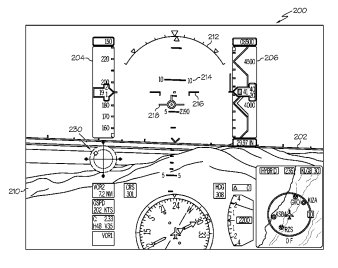 A variety of technologies are covered in patents issued in recent weeks to Honeywell.
U.S. Patent No. 9086280, titled Aircraft Display Systems and Methods with Flight Plan Deviation Symbology, protects an aircraft system with a deviation module that receives a flight plan to a waypoint and compares a predetermined time of arrival to the estimated time of arrival as well as a visual display coupled to the deviation module which can indicate lateral, vertical and/or time deviation in respect to the flight plan. This technology supposedly improves upon conventional aircraft systems which can detect lateral and vertical deviation but do not take time deviation into account so well.
A system designed to reduce the risk that aircraft can collide while being taxied on the ground is at the center of U.S. Patent No. 9082299, entitled Methods and Systems for Taxiway Traffic Alerting. The patent claims a method performed by a system located on an airplane which involves determining whether the aircraft is on the ground, determining that the airplane is in motion, receiving information from a ground control vehicle which indicates when the ground control vehicle will pass the airplane, and generating a potential collision alert if the determined distance is less than a safe distance threshold based upon the wingspans of both the ground control vehicle and the airplane. This innovation for preventing ground aircraft collisions should improve upon radar monitoring systems which can have a multitude of blind spots.
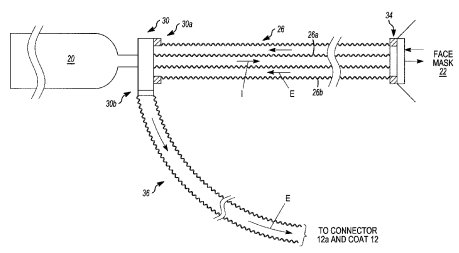 Honeywell is also developing technology for emergency responders ready to jump into dangerous situations to save lives, described in U.S. Patent No. 9032952, which is titled Apparatus Having Cross Conditioned Breathing Air. The self-contained breathing apparatus disclosed here includes a tank of compressed air, a face mask, a coaxial conduit extending from the tank to the mask, two valve assemblies coupled to the coaxial conduit and another conduit extending from the second valve assembly and connected to a protective garment. The innovation defines flow paths for inhaled and exhaled air in such a way that helps to cool air from a warm environment prior to being breathed in by a firefighter.
 Building maintenance staff should find that their jobs are made a little easier through the Honeywell invention protected by U.S. Patent No. 9070174, titled Providing a Diagnosis of a System of a Building. The computer-implemented method claimed here involves displaying an identified system of a building, identifying a number of related components within that building system and identifying a relationship between those components that includes an operational status of the component. This invention allows building maintenance staff to better identify an operational issue with any building system while minimizing the staff expertise and the amount of time it takes to address such an issue.
Fuel cell technologies are also being developed by Honeywell. The company received U.S. Patent No. 9065128, which is titled Rechargeable Fuel Cell. The power generator protected by this patent is comprised of a container holding a flexible fuel cell stack, a metal hydride fuel for producing hydrogen within the container, a perforated anode support surrounding and in close thermal contact with the fuel and a perforated cathode electrode, and an anode both supported by the container and exposed on the container’s outside. The new configuration supposedly supports a more stable temperature for the power generator, improving the production of hydrogen fuel from metal hydride.
Honeywell also recently received U.S. Patent No. 9039917, titled Methods for Manufacturing Components from Articles Formed by Additive-Manufacturing Processes. The method for manufacturing a component claimed here involves forming a diffusion coating comprised of an additive surface layer covering a diffusion layer on a first intermediate article and removing the coating from a first intermediate article to form a second intermediate article. This novel additive manufacturing process purportedly produces components with improved structural integrity, mechanical properties and other characteristics that make it better prepared for hot isostatic processing that removes internal defects.
08.12.15 | Patent Issues, posts | Gene Quinn
No Comments
09.24.15 | Federal Circuit Cases, patent eligibility, Patent Issues | Gene Quinn