


12 Strange and Amazing Patents
To break up the monotony of all work and no play, I wanted to share with you a great slideshow from Inc.com. The slideshow lists 12 “strange and amazing” patents that are remarkable, and mostly ridiculous. From the high-five machine (US 5356330), to the kissing shield (US5727565), to the burial structure for human remains and significant memorabilia (US 6799399) whose resemblance to the Great Pyramids at Giza is uncanny.
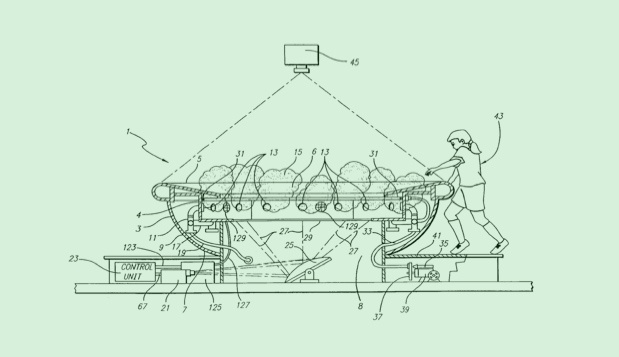
Check out the slide show in its entirety here. In case you thought I was kidding about the remarkable and ridiculous nature of these patents, check out the drawing of the patent for the Interactive Life-Sized Bowl of Soup (US 6168531). That’s right, an interactive life-sized soup bowl not only exists, but there’s a patent for it.
Patent Law Institute is Around the Corner!
 The Patent Law Institute returns for another exciting 2 day run on March 19th and 20th in San Francisco, California. Panel discussions are designed to be of ultimate practice value to all three subgroups in the patent law community: patent prosecutors, patent litigators, and strategic/transactional lawyers. The Patent Law Institute’s New York run was a great success, with rare frankness from the judiciary and attorney panelists. The Institute brings together hundreds of the best patent law practitioners, federal judges and PTO officials as faculty and as Institute participants. Don’t miss this opportunity to learn from and network with the best!
Customize your participation to best meet your practice needs. The Institute has 6 plenary sessions of interest to all patent lawyers. Add your choice of 6 breakout sessions in 3 tracks specially designed for patent prosecutors, patent litigators and those focusing on strategic and transactional aspects of patent law. Plenary sessions include:
-Keynote Address by Robert L. Stoll, Commissioner for Patents
-A dialogue with Federal Circuit Chief Judge Randall R. Rader
-Corporate counsel divulge critical issues that keep them awake at night
-A distinguished panel of Judges from critical U.S. District Courts
-The practice impact of the America Invents Act, and recent Supreme Court and Federal Circuit decisions
-Special Feature: Earn 1 hour of legal ethics credit
If you can’t attend the Institute in person, we’ve added a webcast of the first day of the Patent Prosecution breakout track. Originally it was not webcast from New York City, however, Institute attendees said that the PTO information was too important not to webcast and archive, so we have created this special viewing for you! I will be live blogging from the Patent Prosecution breakout as well.
03.5.12 | Patent Law Institute, posts | Mark Dighton
Top 5 Patent Law Blog Posts of the Week
 Today we continue our weekly installment highlighting the best of the patent blogosphere from the past week. If there are any patent blogs you think should be highlighted by our Top 5, please comment on this post and we’ll check them out.
1) Patently-O: Deference to BPAI: Federal Circuit Affirms Ruling that Monsanto’s Late-Filed Claims Win Priority over Pioneer’s Issued Patent – This post discusses the background and interference claim in Pioneer Hi-Bred International, Inc. (“Pioneer”) v. Monsanto Technology LLC, and how appellate panel gave clear deference to the USPTO Board of Patent Appeals and Interferences – repeatedly focusing on whether the board committed reversible error rather than jumping to the underlying question of whether the Board made the correct decision. (more…)
In Closing Black History Month, a Celebration of African-American Inventors from USPTO
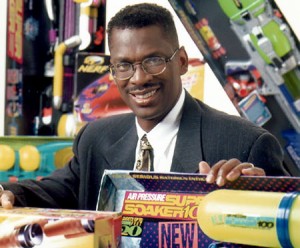 As February draws to a close, we at the Patent Law Practice Center wanted to share in the USPTO’s celebration of African-American inventors and their role in the history of the patent office. In USPTO Director David Kappos’ blog, Director’s Forum, offers a look at “the invaluable contributions African-Americans have made, and continue to make, to the success of the American Experiment…”
In the article entitled, “In Celebration of Black History”, Kappos discusses the first African-American inventors to receive patents,
Among those to whom we owe our nation’s success are a number of innovative African-Americans who distinguished themselves in the field of intellectual property, even before the American Civil War and Emancipation. Although slaves were prohibited from receiving patents on their inventions in the antebellum period, free black inventors were not. Thomas L. Jennings, born in 1791, was 30 when he received a patent for a dry-cleaning process, making him what historians believe was the first black inventor to receive a patent. Jennings’s income went mostly to his abolitionist activities, and in 1831 he became assistant secretary for the First Annual Convention of the People of Color in Philadelphia. (more…)
02.27.12 | posts, USPTO | Mark Dighton
IPWatchdog Review of “Dialogue Between the Bench and Bar”
IPWatchdog.com recently published an article reviewing the “Dialogue Between the Bench and Bar” panel featuring Chief Judge Rader at this year’s Patent Law Institute. The article entitled, “Chief Judge Rader Takes on Lobbying White House and SCOTUS”, was written by Gene Quinn, the IPWatchdog.com blogger, Practice Center Contributor, and panelist at the Patent Law Institute. Gene describes the interaction between the panelists who were not interested in “pulling punches” with each other. According to Quinn’s article,
The discussion was lively, perhaps even explosive. You could nearly see sparks fly when Chief Judge Rader continued to pepper Waxman with question after question about his opinion on the propriety of parties lobbying the White House in order to obtain a favorable amici brief from the Department of Justice. Rader zeroed in on the slippery slope and obviously is not pleased with the mixing of law and politics, saying: “this is a cause for concern… Politics and law have a divide.”
To read the article, “Chief Judge Rader Takes on Lobbying White House and SCOTUS”, click here.
02.22.12 | Patent Law Institute | Mark Dighton
No Comments
03.7.12 | Patent Resources, posts, prior art | Mark Dighton